Proposals
Enterprise sales tools for a Fortune 500 restaurant supplier
Skills Focus
> Product Design
> Workshop Facilitation
> Qualitative User Research
> Product Strategy
01 —
Situation
The client was noticing an alarming cost to their profit margins on small, regional chain restaurants. The problem they noticed was that Sales reps were using too many high-tier discounts and it’s costing them millions. Their original ask was an oversight dashboard where leaders could monitor proposal and request changes.
— 02 —
Approach
I lead a number of experiential workshops (modified event storming) to understand the current state proposal process. Through these workshops I identified a missing stakeholder from the project, the very sales reps causing the issues. After interviewing them, I discovered an opportunity to pivot our work towards improving the flow further up the work stream, building a tool to generate proposals that bake in reduction to those discounts.
— 03
Results
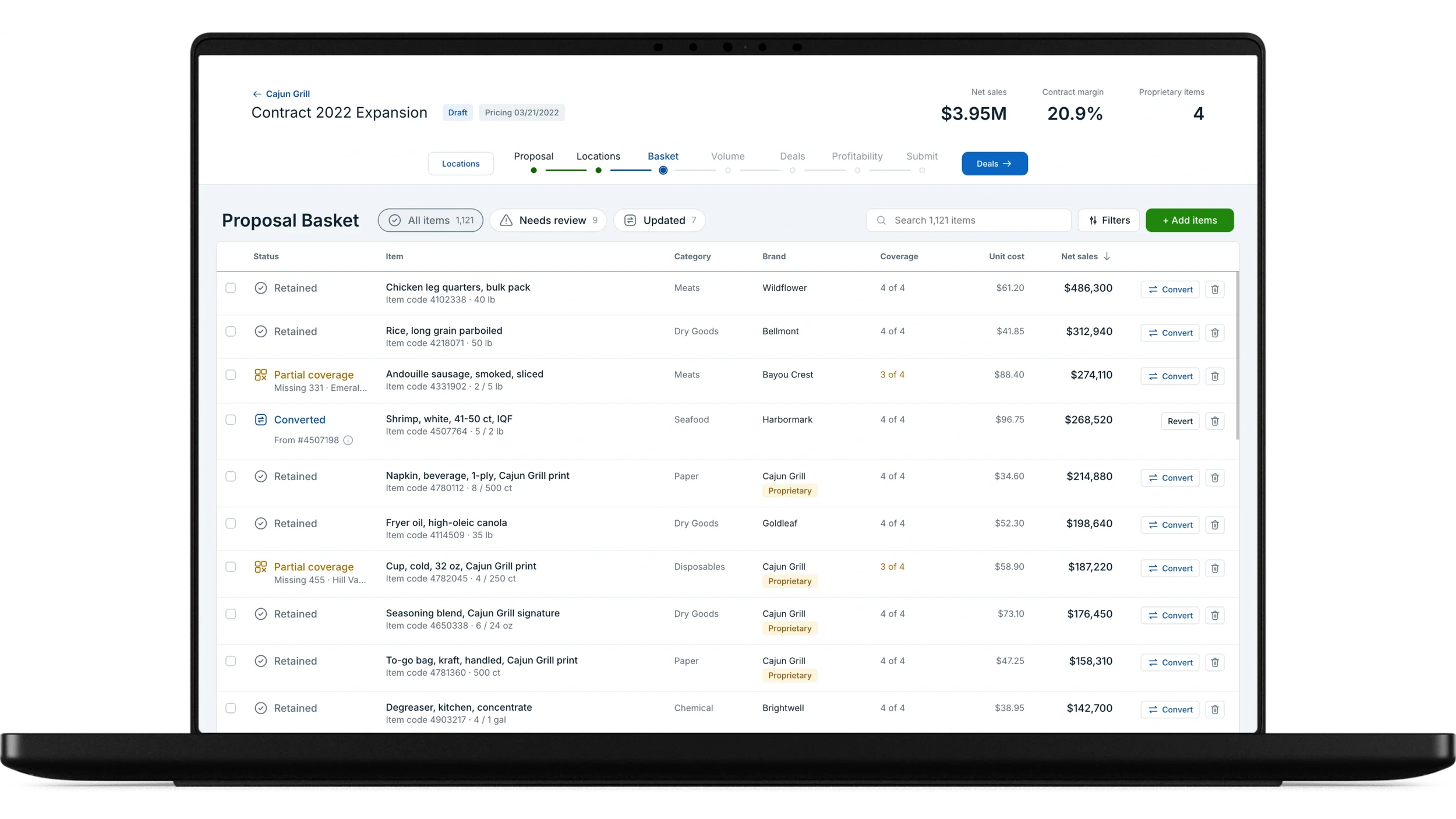
The final design was a major success for both quality of life and the bottom line. The app significantly dropped proposal creation time, meaning sales people could focus on meeting with more clients. Connecting data with business rules prevented over a $1 million in losses to false discounts in the first year. Finally the client was so happy with my work, the contract was extended by 6 months to expand the product to another internal team.
$1 Million
Saved in a year from reducing discounts
6 months
New work sold to expand the project
78%
Reduced proposal creation time
The discount problem was just a symptom
A Fortune 500 foodservice distributor asked for a dashboard. High-tier discounts were costing them millions a year, and they wanted to watch the reps using them.
I ran modified event storming workshops with sales reps, performance leadership and account support, mapping the proposal process end to end. A rep in the first session said the thing that changed the project. "Have you seen how this works? We have to search some old database then cut and paste into an excel just to send a proposal."
Building and even slightly complex proposal could take three to four days. The product and pricing data salespeople needed to defend a price lived in a different system from the workflow that consumed it. Discounting wasn't always just selfish or ignorant move to pump numbers. It was the only lever left to maintain relationships.
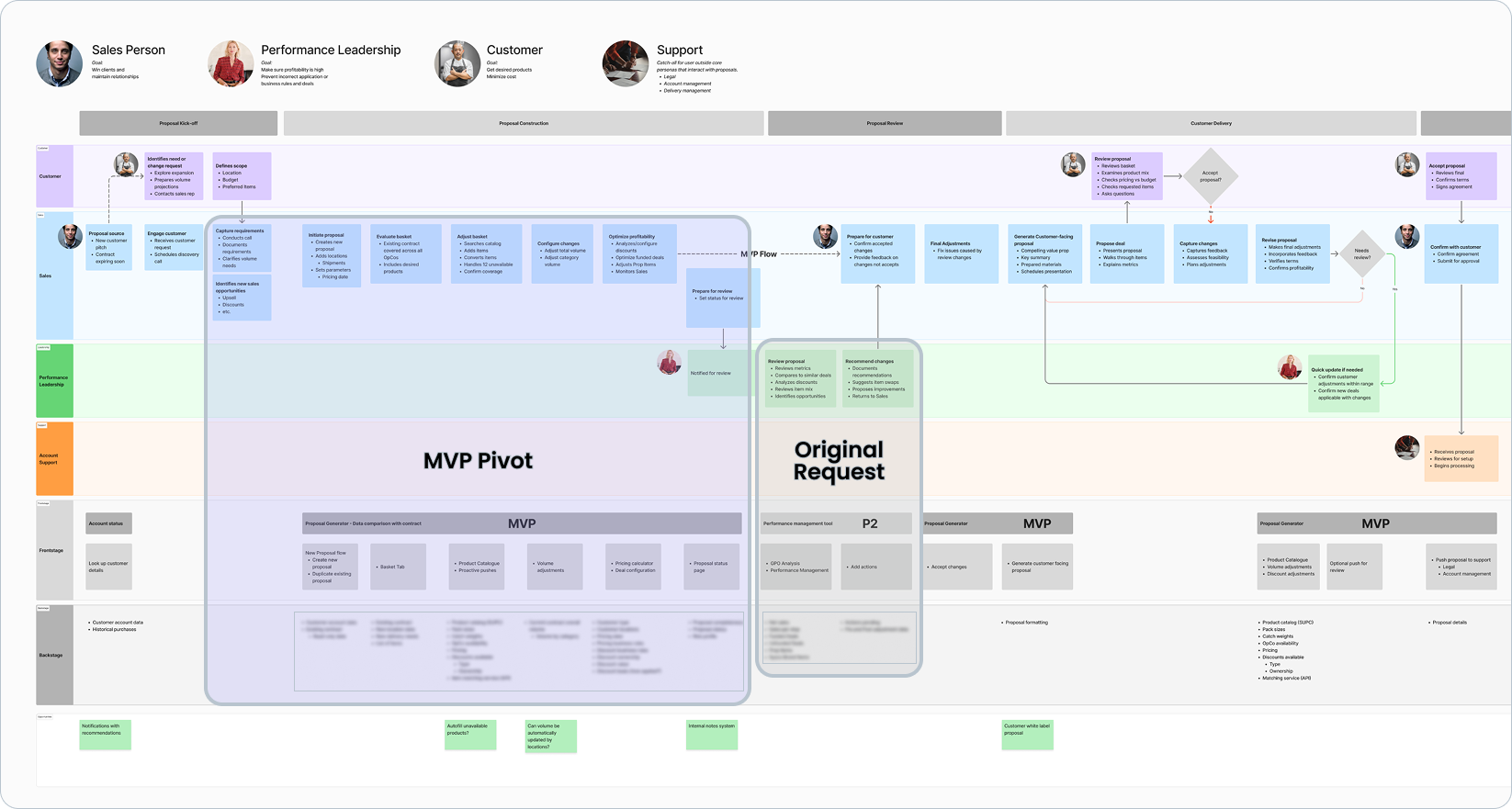
I proposed moving the work upstream. By building a proposal tool, we solve two problems with one design. Discount misuse becomes somethings business rules can police in real-time before anything reaches a client. At the same time, the teams building these proposal are excited to adopt this new tool and pick up much more time to spend improving the customer relationship. To make sure the final design solve the key challenges for both sides of the equations I pushed for these key decisions.
Flatten the flow.
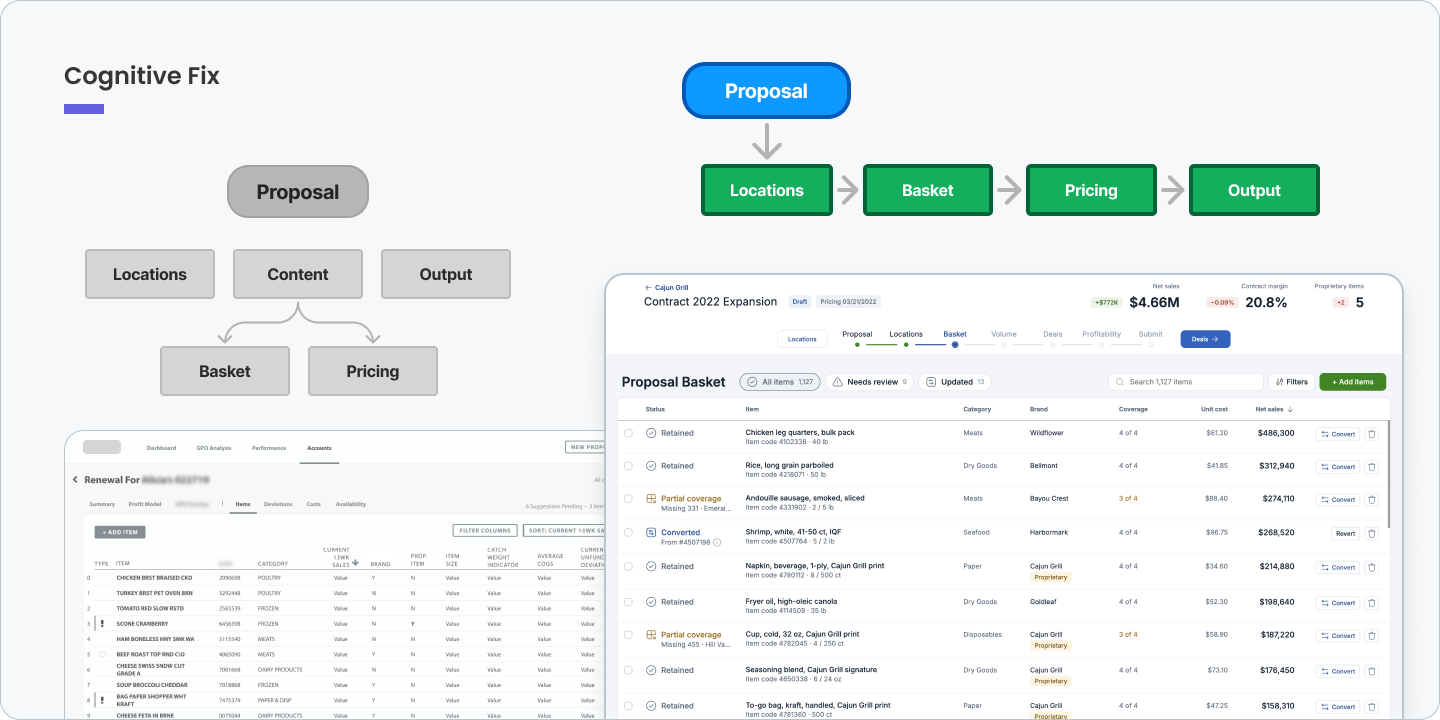
My first iteration of the design at low fidelity nested the key elements into tabs. Reps struggled in two main ways. First they would jump right to basket adjustments without addressing key elements like account and location changes which filter down to later steps. Second is that it was more difficult for a person to step away from a single client then pick up where they were and know what was left. After I flattened it in the next round : locations, basket, pricing, output. One pass, no backtracking.
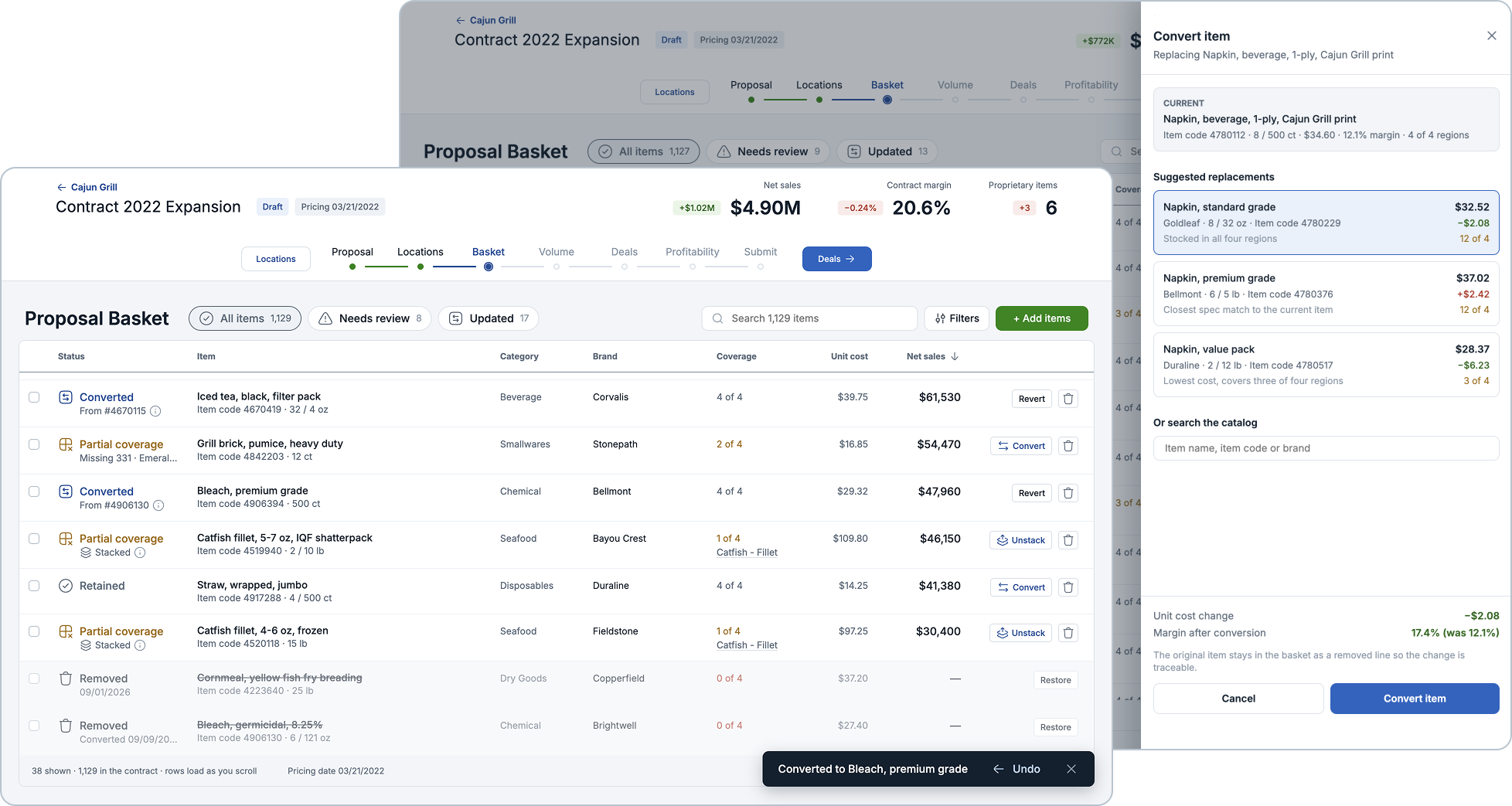
Show the whole trade
The old tool nested the basket and pricing inside one "content" step, so a rep couldn't tell where they were or what was left. I flattened it: locations, basket, pricing, output. One pass, no backtracking.
Cover four regions with one menu
Regional distribution centers don't carry the same items, or the same pack sizes of the same item. A chain still wants one menu across all of them. I designed coverage stacks: a rep groups several items into a single menu slot that fills differently by region, so the customer gets consistency and nobody promises a delivery that can't happen.
One design, two solutions
Basket creation time fell 78%. Discount spend fell about $1m in the first year. The work led to six more months with the client, including the oversight dashboard they asked for first, which was worth building once the data underneath it was real.
Their number was real. It described a symptom, and the symptom had a person behind it.
$1 Million
Saved in a year from reducing discounts
6 months
New work sold to expand the project
78%
Reduced proposal creation time
Learning and Growth
This project was a clear example of a business symptom masking a human problem. I learned a valuable lesson about looking past the initial premise and easy solution. Digging further allowed me to address the root cause and solve two client issues.